
The Truth About Cat Slow Feeder Bowls: Do They Actually Work?

Wondering if a cat slow feeder actually stops the “scarf and barf”? Discover the pros, hidden cons, and how to choose the right bowl for your cat.
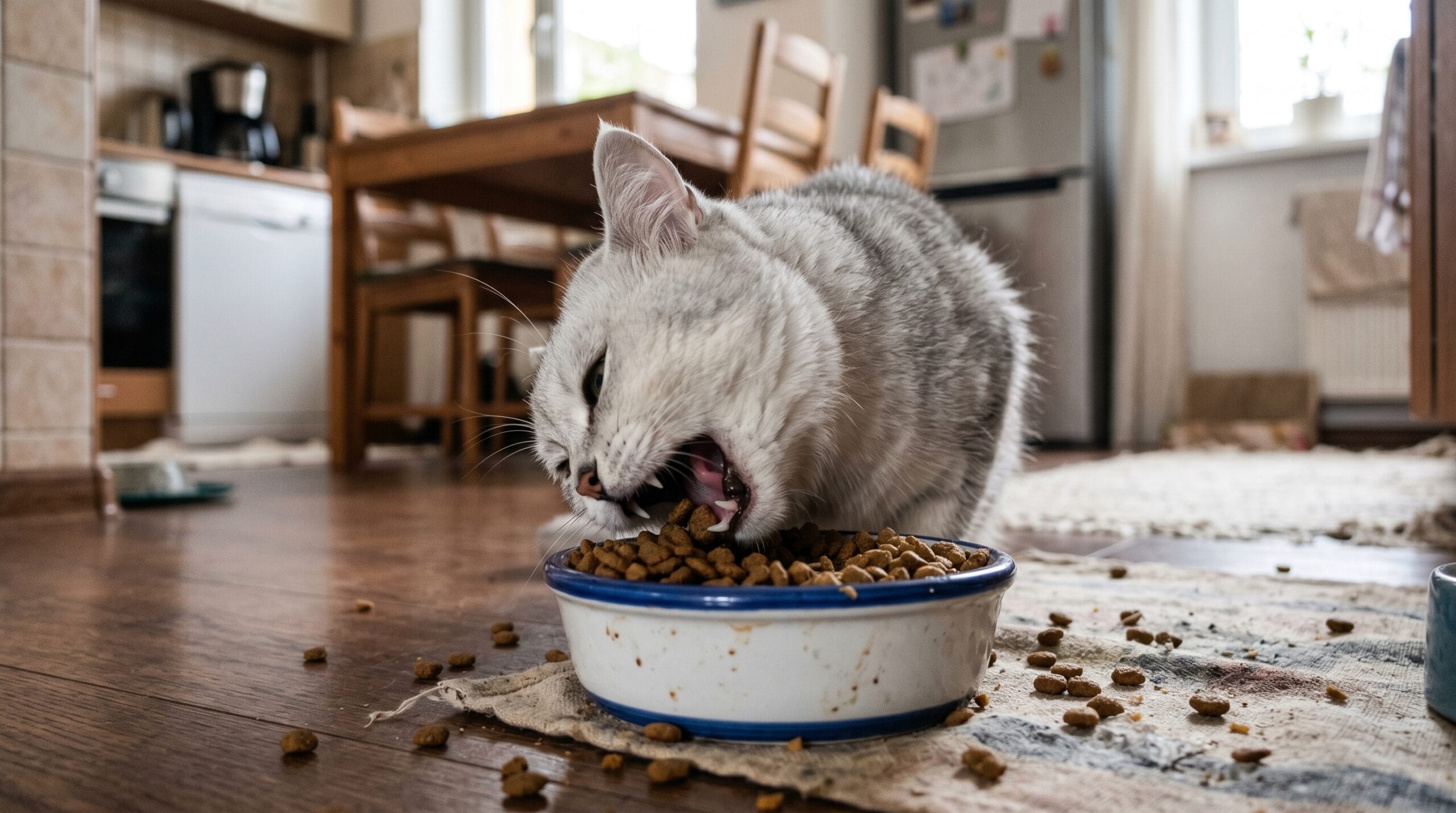
Every cat parent knows the sound. You are fast asleep in bed. Suddenly, you hear that dreaded noise from the hallway. You just fed your cat five minutes ago. Now, their dinner is in a puddle on your favorite rug.
Veterinarians usually call this regurgitation. Meanwhile, cat owners simply call it the “scarf and barf.”
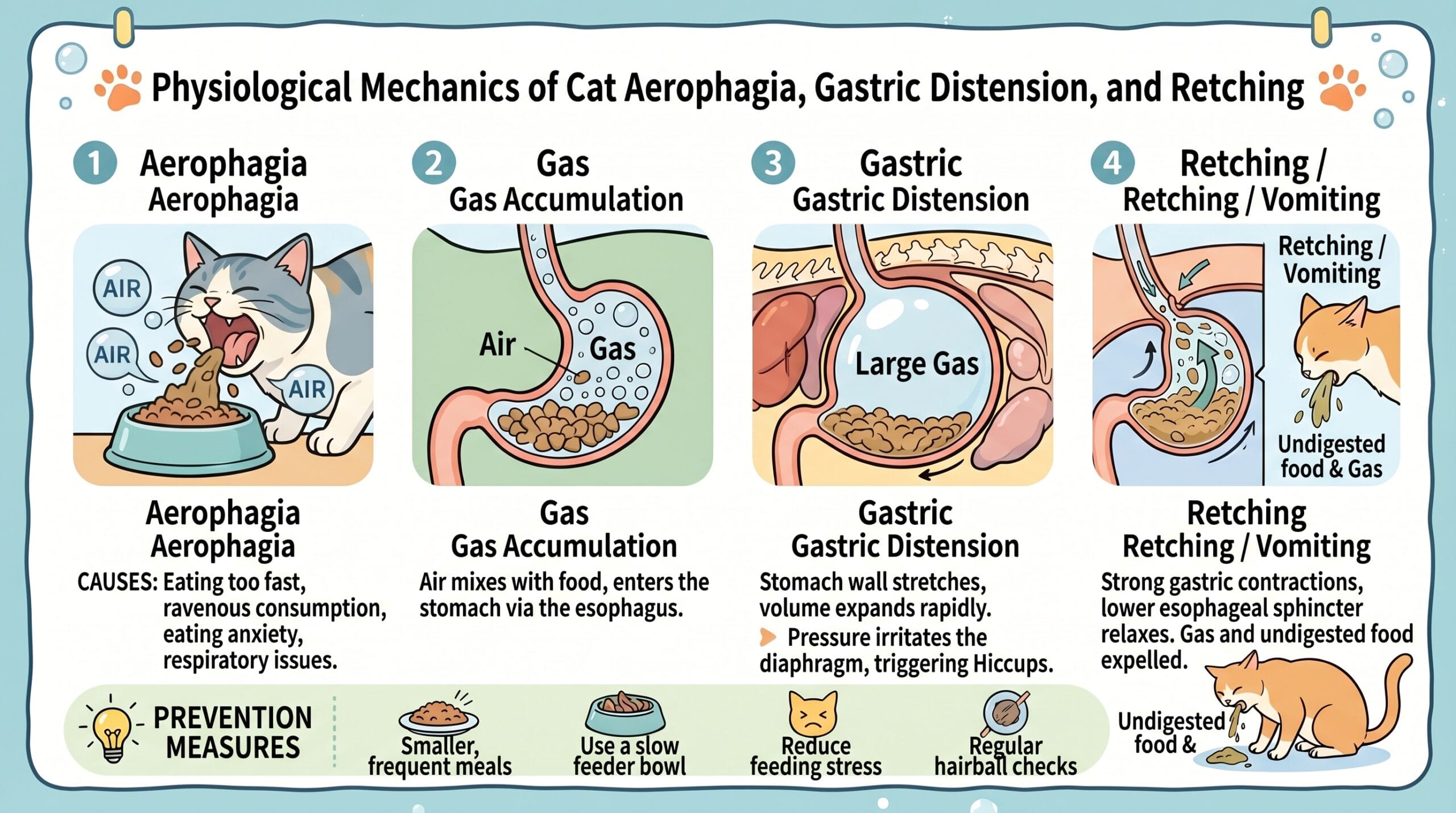
When cats eat too fast, they swallow excess air. This overloads their stomachs and immediately triggers a reflex to throw everything back up. To solve this common issue, the pet industry flooded the market with a specific product. But does a cat slow feeder actually solve the problem? Or do these maze-like dishes just frustrate our feline friends?
Here is what the marketing campaigns will not tell you.
The Science Behind a Cat Slow Feeder
The core concept is incredibly simple. Normally, cats eat from a flat surface where they can inhale kibble like a vacuum cleaner. Instead, a cat slow feeder features ridges, bumps, or obstacles. Consequently, the cat has to use their tongue to fish the food out piece by piece.
Where These Bowls Excel (The Pros)
- They kill the regurgitation reflex: These bowls force the cat to take single bites. Because of this, the stomach has time to expand naturally. Digestion actually begins in the mouth, and eating slower greatly reduces stomach upset. (Check out this [guide on feline digestion – External Link Placeholder] for more details).
- Provide mental enrichment: Indoor cats are notoriously under-stimulated. In the wild, felines must hunt for their meals. A puzzle bowl mimics foraging, forcing their brain to work for the reward.
- Aid in weight management: It takes about 15 to 20 minutes for a cat’s brain to register that it is full. Therefore, a slower eating pace means they feel satisfied with fewer calories.
The Hidden Drawbacks (The Cons)
If you just grab the first cheap plastic bowl you see online, you might cause bigger problems.
- Whisker Fatigue: This is the primary reason cats hate poorly designed bowls. A cat’s whiskers are highly sensitive tactile sensors. If the ridges in the bowl are too deep, the whiskers constantly rub against the hard sides. It physically hurts them.
- The “Plastic Acne” Trap: Most budget-friendly options are made of hard plastic. Unfortunately, cheap plastic gets microscopic scratches over time. These tiny scratches trap bacteria and oils from the food. When your cat rubs its chin against the surface, it causes feline acne.
- Dental Frustration: Complex mazes are simply cruel for cats with dental issues. They literally cannot grip the kibble properly.
How to Choose the Best Cat Slow Feeder
If you want to stop the late-night rug cleaning without making your cat miserable, you must buy the right type of bowl. You can explore our [recommended pet care products – Internal Link Placeholder] to see some examples.
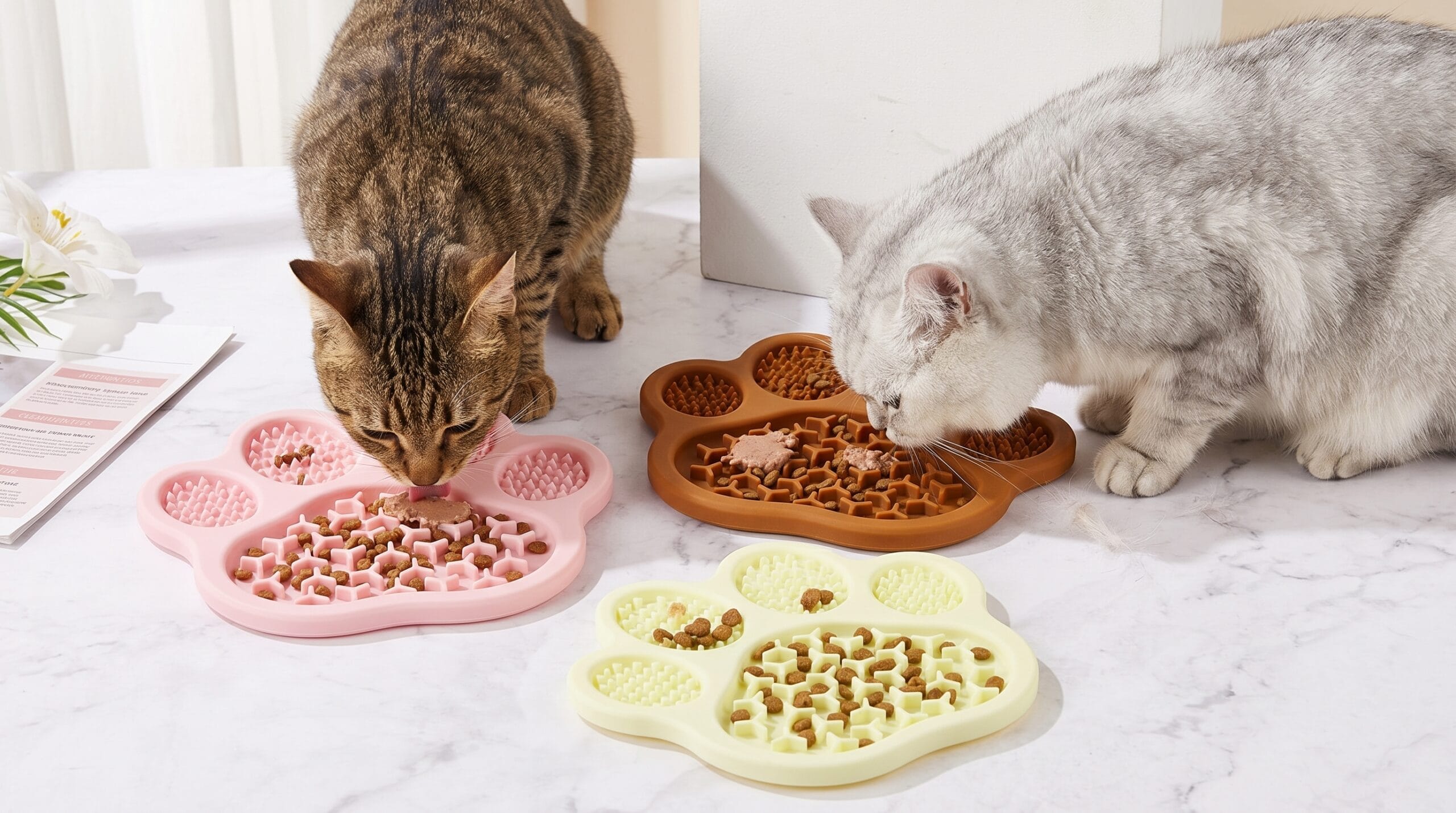
- Ditch the Hard Plastic: Always go for high-quality ceramic or food-grade, BPA-free silicone. Ceramic is non-porous and prevents bacteria buildup. Meanwhile, soft silicone prevents cats from bumping their noses and offers great grip on the floor. Both are perfectly safe for the dishwasher.
- Keep it Wide and Shallow: Look for a cat slow feeder that resembles a textured plate rather than a deep maze. The ridges should be very low. This ensures the cat’s whiskers are not crushed while eating.
- Start Easy: Do not buy an “expert level” puzzle bowl right away. First, start with a simple wave design. If your cat handles that well but still eats a bit too fast, you can slowly upgrade to a more complex pattern later.
The Final Verdict
Slow feeder bowls absolutely work. However, they are not a one-size-fits-all magic cure.
If your pet is a speed-eater, a shallow ceramic or BPA-free silicone cat slow feeder is an amazing investment for their digestion. Just remember that you are dealing with a cat. If you make mealtime too difficult, they will simply knock the bowl off the counter. Keep it shallow, choose easy-to-clean or soft materials, and enjoy the end of the “scarf and barf” era.

